Understand to better protect yourself
How is HIV transmitted?
untreated?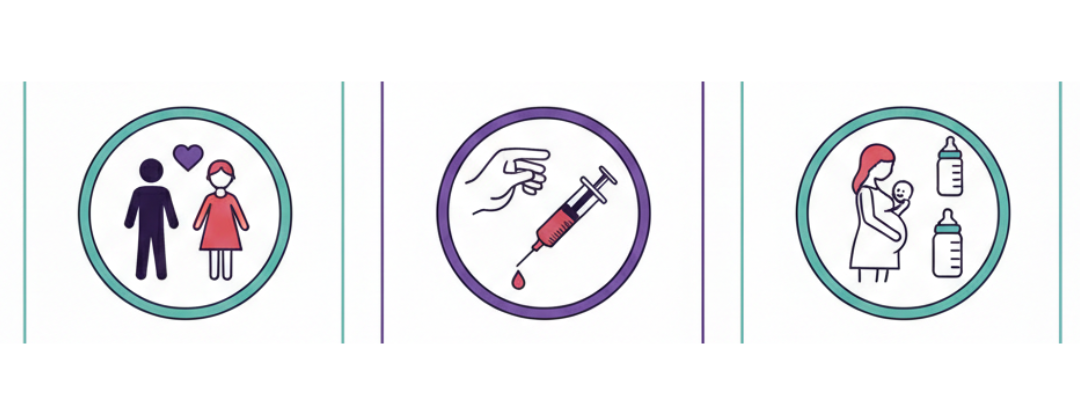
1
Sexual transmission
Transmission occurs during unprotected vaginal, anal, or sometimes oral sex. Any unprotected intercourse can transmit HIV.
Sexual transmission depends on viral load, genital health (ulcerations, other STIs), and sexual & reproductive culture.
2
Blood transmission
- *Sharing needles: significant risk when sharing needles, syringes or sharp objects contaminated with infected blood.
- *Blood transfusion: now insignificant locally thanks to systematic blood donation screening (blood safety).
- *Occupational exposure: some professions (health sector handling biological fluids) risk accidental needle-stick injuries.
3
Mother-to-child transmission
(Mother with detectable viral load)
Third trimester: higher risk due to increased blood exchange across the placenta.
Labor & delivery: during vaginal birth the fetus is exposed to vaginal secretions and maternal blood promoting transmission.
Breastfeeding: possible; risk increases with breastfeeding duration > 6 months.
Key Points
- *HIV is NOT transmitted through handshakes, hugs, saliva, sweat, or mosquitoes.
- *Antiretroviral therapy reduces viral load to undetectable and prevents transmission (U=U).
- *Regular testing is essential for early care.
Protect Yourself
Use condoms, don't share injection equipment, get tested, and follow regular treatment.