●
Condoms
They remain a classic but essential method to protect against HIV and other STIs.
A comprehensive approach against HIV
Combination prevention is a public health strategy that uses multiple complementary tools and approaches to prevent HIV transmission. The idea is that combining different approaches, tailored to each person and context, is more effective than using a single method.
This strategy targets both people living with HIV and those who are not infected, to minimize the risk of transmission.
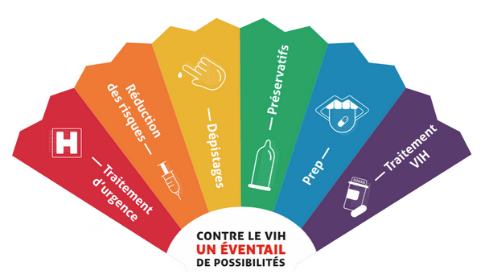
They remain a classic but essential method to protect against HIV and other STIs.
Medication taken by an HIV-negative person to prevent HIV infection before exposure to the virus.
People living with HIV on effective treatment achieve an undetectable viral load, meaning they do not transmit the virus (U=U principle).
Post-Exposure Treatment (PEP) is an emergency treatment given to an HIV-negative person after high-risk exposure to prevent infection.
Encouraging condom use, reducing the number of sexual partners, and adopting safer sexual practices.